The Auditing menu allows administrators to view and search audit logs for actions completed within the platform. This can include form updates, integration changes, submission views, and other user or system actions.
TABLE OF CONTENTS
Accessing Audit Logs
To access the audit logs:
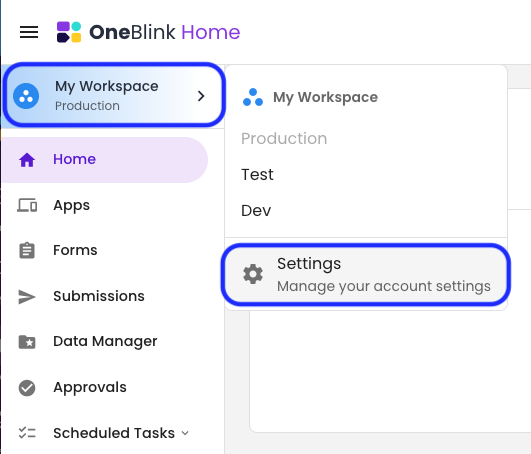
Step 1: Open the Environment Picker and click the Settings option.
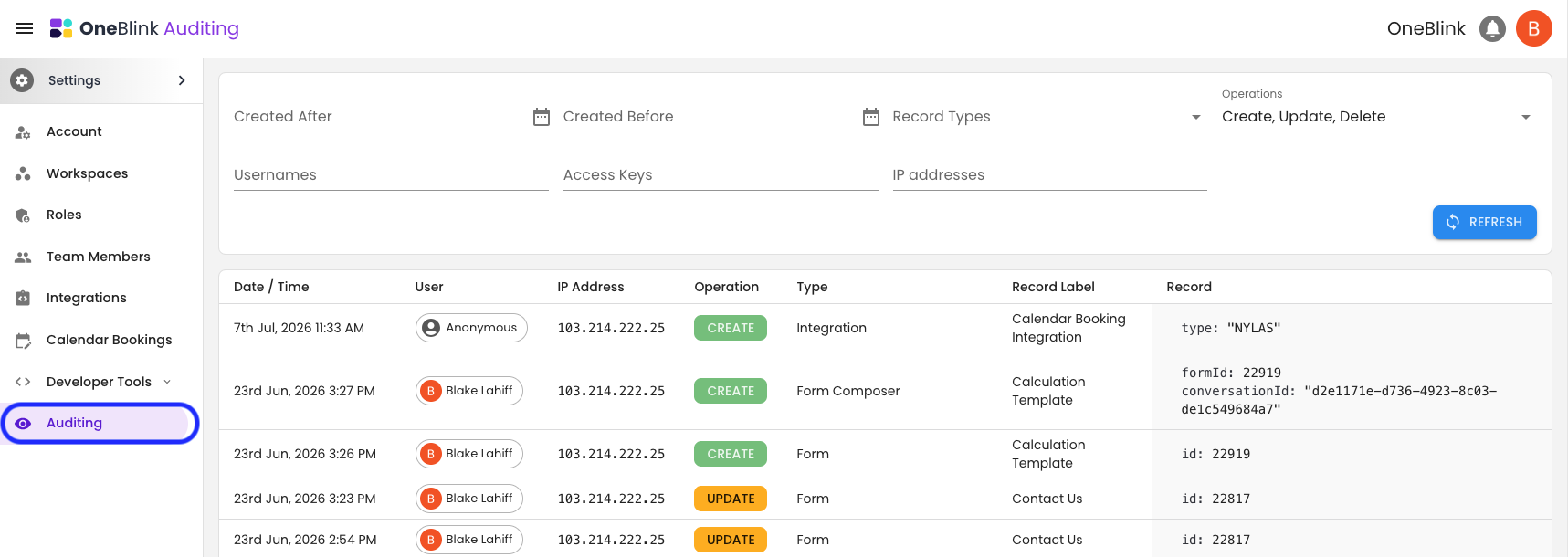
Step 2: Click the Auditing menu.
Searching Audit Logs
Audit logs can be searched using a range of filters to help you find specific actions within the platform.
There are 6 search filters available.
Search Filters
Date and Time
Use the date and time fields to filter logs by when they were created. You can enter a Created After and Created Before date and time. By default, Created After is set to 12:00 am yesterday.
Record Type
Use the Record Type filter to search within a specific area of the platform. For example, if you are looking for changes made to the Payment integration, you would use the Integration record type.
Operation
Use the Operation filter to search by the type of action performed. Examples include View, Create, Update, Delete, and Search.
Usernames
Use the Usernames filter to search by the team member or app user email address that created the log.
Access Keys
Use the Access Keys filter to search for actions associated with a specific Access Key.
IP Addresses
Use the IP Addresses filter to search by the IP address used when the log was created.
Audit Log Records
Audit log records are displayed in columns that help identify when an action occurred, who performed it, and what record was affected.

Date/Time
The date and time the audit log was generated, shown in local time.
User
The user who triggered the action that created the log. If the action was completed by a machine using a key, the key will be shown instead.
IP Address
The IP address used when the action was performed. This can help distinguish between expected user activity and unexpected or illegitimate usage.
Operation
The action the user was performing.
Type
The record type, or the area of the platform affected by the action.
Record Label
The label of the record that was affected. For example, if a form was updated, this would be the form name.
Record
The identifier for the affected record. For example, if a form was updated, this would be the form ID.
Getting Help
If you need any assistance with auditing, please reach out through the Report Issue menu or email support@oneblink.io.
Was this article helpful?
That’s Great!
Thank you for your feedback
Sorry! We couldn't be helpful
Thank you for your feedback
Feedback sent
We appreciate your effort and will try to fix the article